Aluminium vs timber pergolas: which lasts longer?
Timber has a traditional appeal, but aluminium pergolas are increasingly the practical choice for Devon’s damp climate. We compare maintenance requirements, expected lifespan, and how each material handles our wetter-than-average weather, to help you choose the right option for your garden.
How each material handles Devon weather
Devon gets more rain than most of England, and gardens near the coast or an estuary also deal with salt air and long spells of damp. Timber takes on moisture, swells and shrinks as the seasons change, and in time this opens up joints and lets rot in, particularly where posts meet the ground. Aluminium does not absorb water, so it does not rot, warp or split.
The aluminium used for good-quality pergolas is also protected by a powder-coated finish. AKENA, for example, builds its structures from 6060 T6 alloy, a grade chosen for its strength and how well it takes heat treatment, and then powder coats the profiles. That coating is what keeps the frame looking the same colour year after year.
Maintenance
A timber pergola needs regular care to stay sound. Expect to clean it and re-treat it with stain, oil or preservative every few years, and more often on exposed sites. Posts and beams may eventually need repairing or replacing.
An aluminium pergola needs very little. A wash down with warm soapy water a couple of times a year, and clearing leaves from the gutters, is usually all it takes. There is nothing to sand, paint or treat.
Lifespan
How long a timber pergola lasts depends heavily on the wood used, how it was treated and how well it has been looked after. Aluminium is far less sensitive to all three, which is why it suits a damp climate. Both AKENA and Deponti back their structures with manufacturer warranties, and we confirm the terms for your chosen product with your quote.
Looks and finish
Timber has a warm, traditional look that some homes suit very well. It will weather and change colour over time unless it is kept treated.
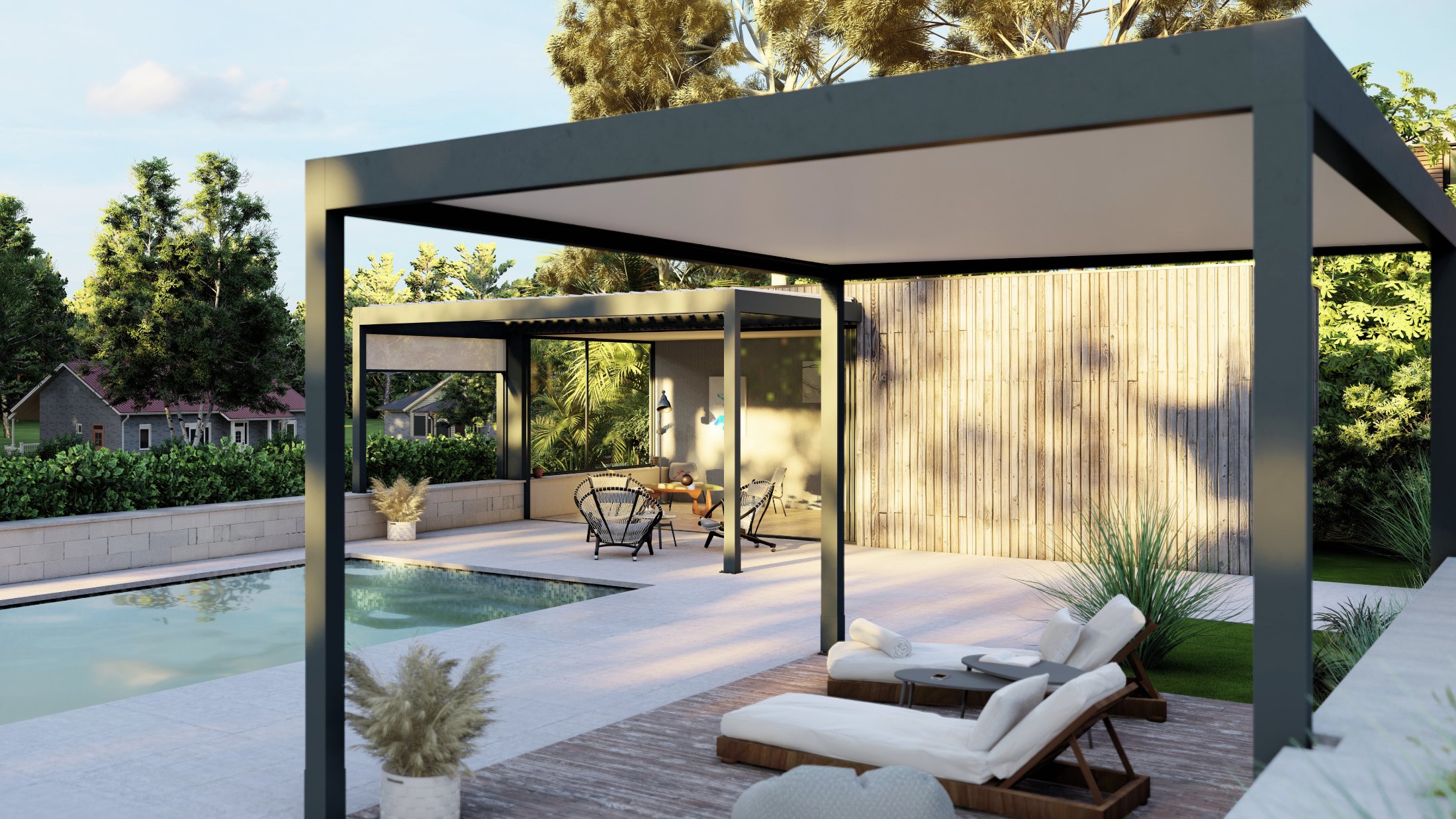
Aluminium is available in a wide range of powder-coated colours, from anthracite and black to white and cream, so a frame can be matched to windows, doors or cladding. The profiles are slimmer than timber for the same span, which keeps the structure light-looking and lets more daylight through.
What aluminium makes possible
The biggest difference is what each material can carry. A timber pergola is normally an open frame, perhaps with climbing plants or a fabric cover. An aluminium frame can take a proper roof and side screens:
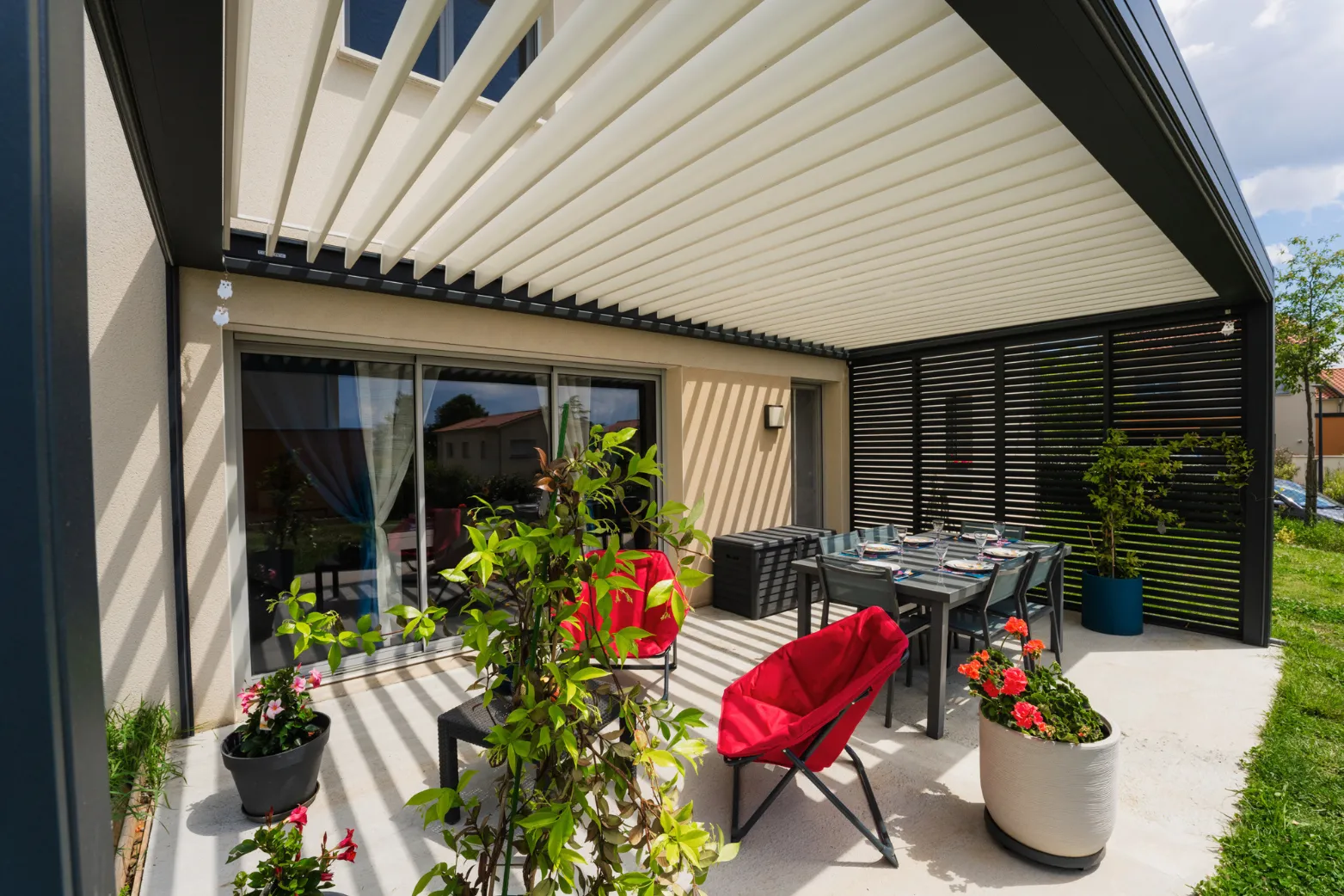
- Louvred pergolas with motorised blades that open for sun and close fully against rain
- Glass or polycarbonate roofs, as on our verandas
- Sliding glass, louvre or solid side panels to close the space in, as in our glass rooms
- Integrated LED lighting and heating for evening use
That flexibility is the main reason most of our customers choose aluminium. A pergola you can close against the rain gets used on far more days of the year.
Cost
A basic timber pergola usually costs less to buy than an aluminium one. The gap narrows once you allow for years of treatment and repairs. You can see our starting prices on the price guide, or design a louvred pergola in 3D and see the price as you go.
Which should you choose?
If you want a simple garden feature for plants, and are happy to maintain it, timber can be a good choice. If you want a covered space that you can use in most weather, with little upkeep, aluminium is the better fit for a Devon garden.
FAQs
Common questions.
Does an aluminium pergola rust?
No. Aluminium does not rust, and the powder-coated finish protects it further, including on coastal sites. Cleaning it with warm soapy water a couple of times a year is usually all the care it needs.
How often does a timber pergola need treating?
Usually every two to three years with stain, oil or preservative, and more often on exposed or coastal sites. Without it, timber is prone to rot, warping and splitting, especially where the posts meet the ground.
Can I add side panels or glass to a pergola later?
Yes. Glass, louvre and solid side panels can be added to an aluminium system after installation. Tell us at your site visit what you might want in future, so we can position posts and fixings to suit.
From the blog
Related posts.
Next step
Talk it through with us.
Get in touch and we will get started on a quote.